
As an Amazon Associate, I earn from qualifying purchases at no extra cost to you.
13 Light Blue Living Room Decor Ideas to Copy Instantly

One morning I woke up, looked at my beige walls, and felt like I was living inside a sad bowl of oatmeal. People tell you to stick to neutrals for safety, but honestly, that is just boring advice for people who are scared of a little personality. I finally decided to embrace color, and honestly, picking 13 light blue living room decor ideas changed my whole mood.
Most folks struggle because they pick a blue that looks like a hospital room or a nursery. They buy the wrong shade, paint the whole wall, and then wonder why they feel chilly instead of cozy. You need the right balance, some warmth, and a bit of nerve to make it work.
We are going to walk through 13 ways to make your home pop with light blue. You will learn how to layer textures, pick the right accents, and keep your space from looking like a sad ice cube.
1. Paint Your Walls with a Soft Sky Hue
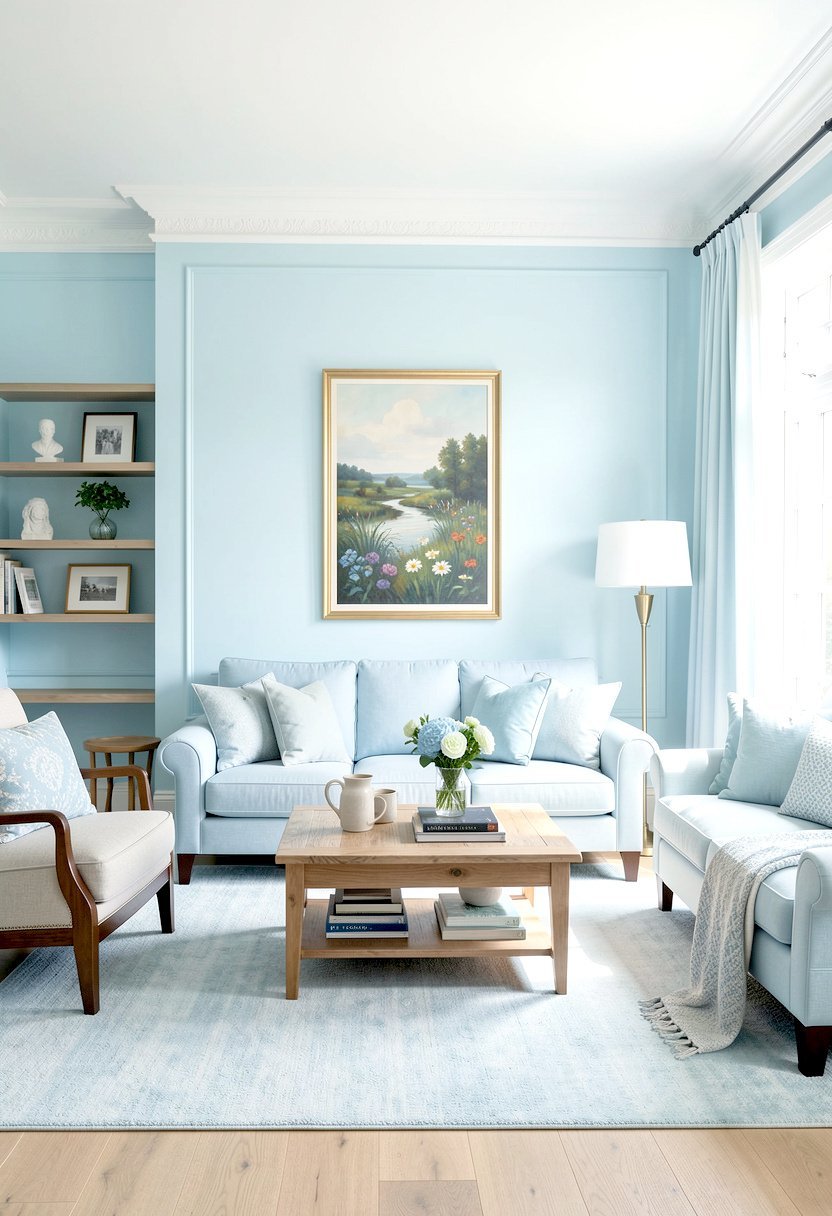
Start by choosing a light blue paint that has a bit of grey in it. If you pick a bright, baby blue, your room will look like a child bedroom, which is a mistake I see way too often. A soft, dusty shade feels sophisticated, calm, and expensive. It acts like a neutral backdrop, making your living room furniture look better.
Do not be afraid to paint the whole space, but keep your trim white to provide a sharp, clean edge. This simple trick adds depth, prevents the color from feeling flat, and makes the room feel taller. If you only paint one wall, you lose the cohesive, airy vibe that blue paint provides. Just go for it, paint all four walls, and watch how the natural light bounces around the room in a way that feels totally fresh.
Trust me, this shade is the ultimate upgrade.
- Select a greyish blue tone.
- Avoid bright baby blue shades.
- Keep your trim bright white.
- Paint all walls for depth.
2. Layer Textures for a Cozy Vibe
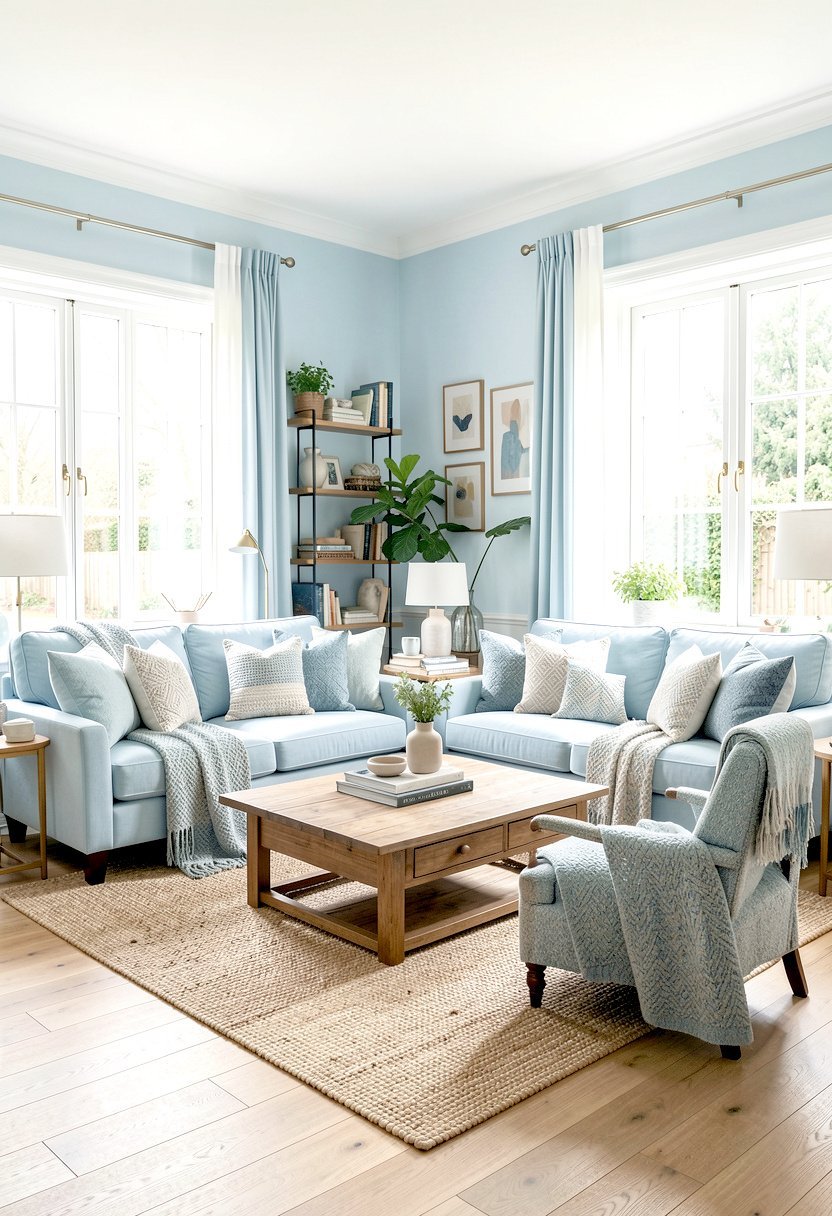
Light blue can feel a bit cold, so you need to bring in texture to keep things warm. I love using chunky knit blankets, velvet pillows, or even a jute rug to ground the space. If you skip the texture, your room feels like a doctor office, and nobody wants to hang out there. You have to mix soft fabrics with hard surfaces like wood or metal.
Layering is not just about looks, it is about how the room feels when you sit down. A smooth leather chair next to a fuzzy blue pillow creates a perfect mix of styles. People often forget that contrast is key, so do not use the same fabric for everything. Keep your big pieces neutral, use the blue for the accents, and watch the room transform into a space that feels inviting and soft.
It really is all about that tactile experience.
- Use chunky knit blankets here.
- Add velvet pillows for warmth.
- Mix in natural jute rugs.
- Contrast hard and soft items.
3. Mix in Rich Wood Tones

Blue and wood are best friends, especially when you use a warm, honey-colored oak or walnut. The blue makes the wood grain pop, and the wood adds the warmth that a light blue space usually craves. I once tried white furniture with blue, and it looked way too sterile, like I was living in a spaceship. Do not make that same mistake by skipping the wood.
Try a coffee table with a nice grain, a wooden side table, or even some shelves filled with books. The earthy tones stop the blue from feeling too airy or dreamlike, giving it a solid foundation. If you have floors that are already wood, you are halfway there. Just lean into it, add a few more wooden pieces, and you will see the balance shift toward something that feels truly like a home.
Everything needs that natural anchor to feel right.
- Choose warm walnut wood pieces.
- Avoid too much white furniture.
- Highlight the natural wood grain.
- Use shelves for balance now.
4. Choose Navy Accents for Contrast

If you only use light blue, your room will look like a washing machine. You need a bit of navy to anchor the space and give your eyes a place to land. I like to throw in a navy blue lamp, a dark rug, or even some patterned curtains to break up the lighter shades. It is all about depth, and navy is the secret ingredient for success.
Using only one shade of blue is a rookie mistake that makes a space feel flat. By adding navy, you create layers and interest that show you put thought into the room. Keep the light blue for the walls and large seating, then use navy for the smaller items like throw pillows or picture frames. It is a simple shift that makes the whole room look professional, balanced, and intentionally designed by you.
Depth makes all the difference here.
- Add navy blue lamp shades.
- Use dark rugs for contrast.
- Apply navy to small items.
- Break up the light blue.
5. Add Brass for a Little Sparkle
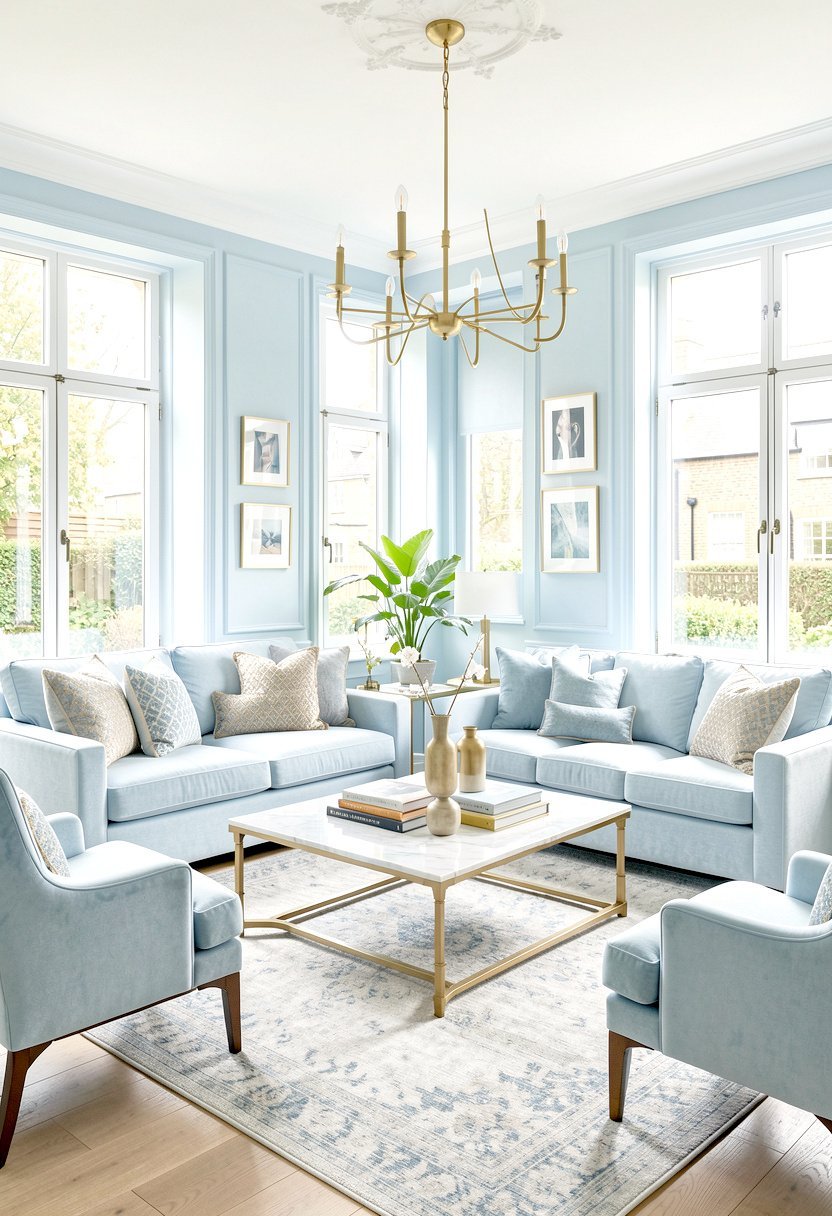
Light blue is a cool color, so it needs a bit of warm metal to wake it up. I swear by brass or gold hardware, like a chandelier, cabinet pulls, or a thin frame on a mirror. Silver or chrome just makes the room feel colder, which is the last thing you want when trying to create a cozy living room space. Go for the gold, literally.
A brass light fixture is like jewelry for your home. It pulls everything together and adds a touch of glamour that keeps the light blue from feeling too casual. If you have a coffee table with brass legs, that works too. The glow from the metal against the blue walls is beautiful in the afternoon sun. Stop settling for basic silver and start using gold to bring your room to life.
It is honestly the easiest trick I know.
- Use brass for light fixtures.
- Avoid using silver or chrome.
- Add gold frames on mirrors.
- Bring warmth with metal accents.
6. Pick Patterned Pillows to Pop
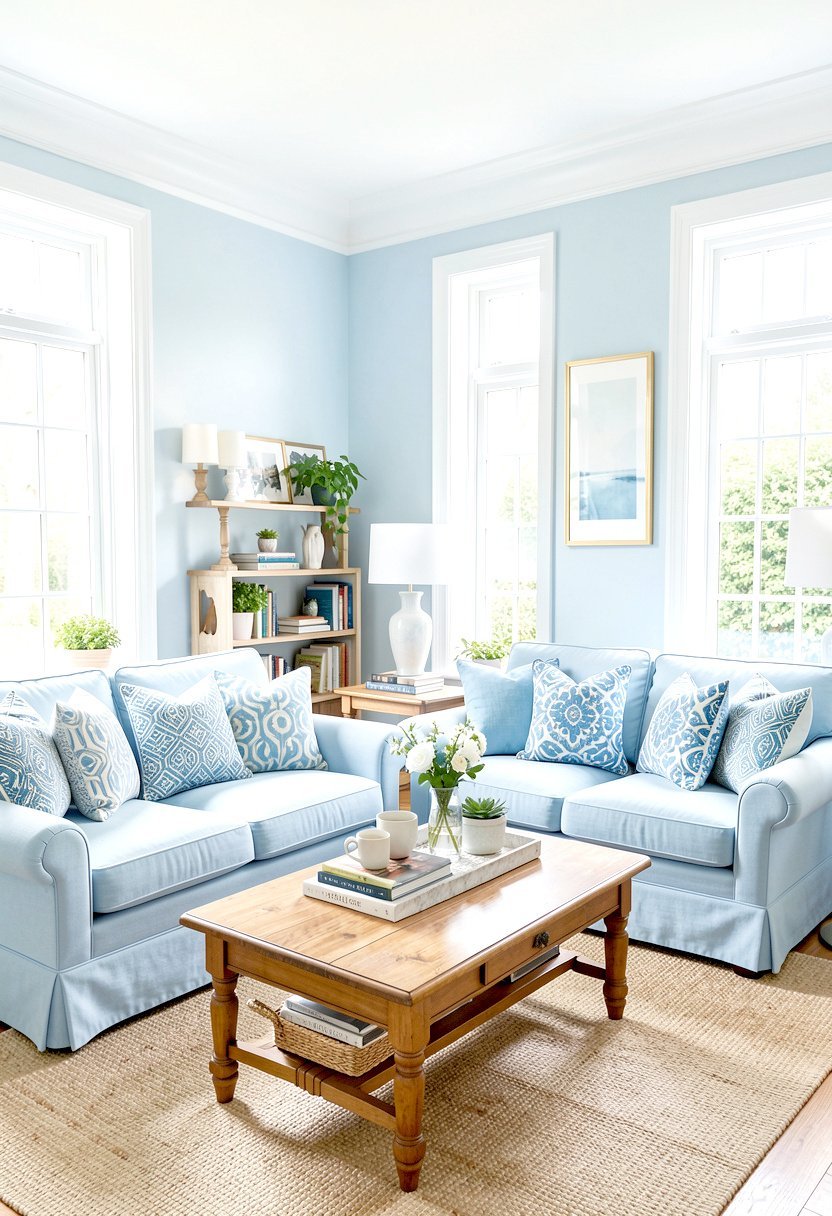
Pillows are the cheapest way to change a room, so stop playing it safe with plain fabrics. Find a pattern that mixes your light blue with white, cream, or even a soft tan. It brings movement to your sofa and makes the space feel like a designer touched it. I see people buying matching pillow sets all the time, which is just lazy and dull.
Mix your patterns, use a stripe next to a floral, or pair a solid with a busy print. As long as the colors share that light blue base, they will look great together. This adds personality, tells a story, and makes your home feel like yours rather than a catalog page. Throw those boring solid pillows in the trash, buy some fun patterns, and watch how much more alive your couch suddenly feels.
Life is too short for boring pillows.
- Mix different pillow fabric patterns.
- Use light blue base colors.
- Avoid matching solid pillow sets.
- Bring movement to the sofa.
7. Use Natural Light for Flow
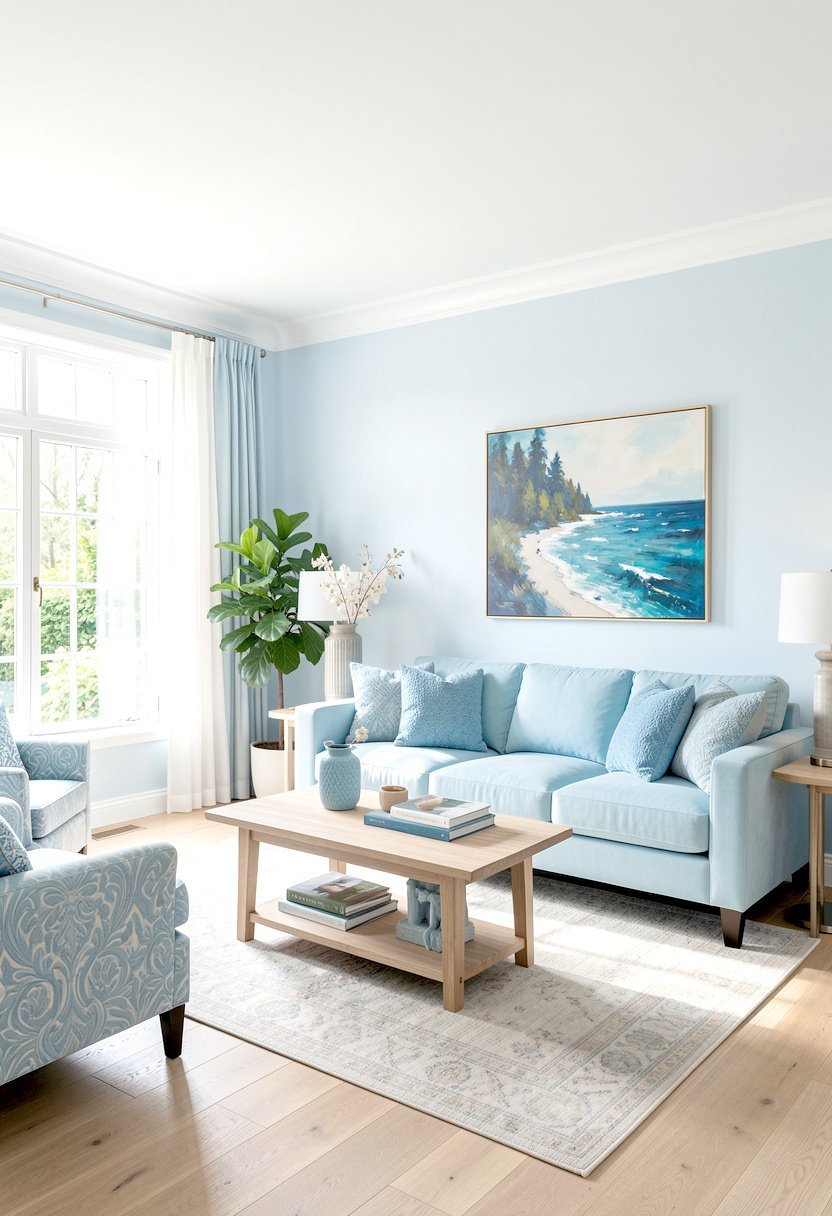
Light blue needs sun to really sing. If you have dark curtains that block the windows, you are killing the whole vibe of the room. I use sheer white drapes that let the light come in while still giving me some privacy. It keeps the room airy and makes the blue walls look bright, clean, and happy rather than sad or dim.
Heavy, dark drapes are a huge mistake if you are trying to embrace a light color palette. They trap the space, make it feel smaller, and suck the life out of your walls. If you want a darker look for movies, just add a second, lighter layer that you can slide aside. Keep it simple, keep it bright, and let the sun do the work of making your home look beautiful.
Light is your best friend here.
- Use sheer white window drapes.
- Avoid heavy dark curtain fabrics.
- Let the sun reach walls.
- Keep the space feeling airy.
8. Display Art with Blue Tones
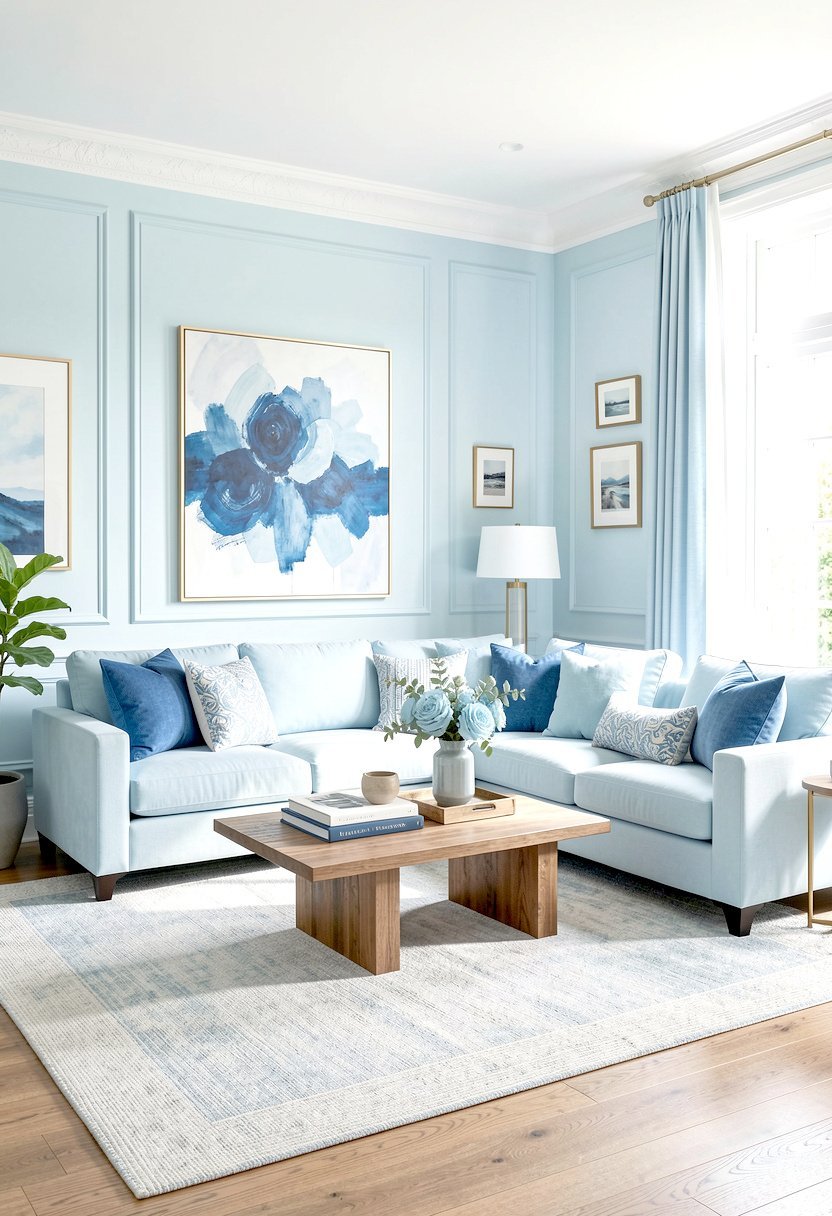
Find some art that uses the same blue as your walls to create a custom look. I like to hunt for vintage prints or watercolor paintings that have splashes of that specific shade. It ties the room together and makes the wall color feel intentional. Do not just hang random art that clashes, because that just ruins the calm, blue aesthetic you worked so hard to build.
Frames also matter, so pick wood or gold to keep the warmth going. A piece of art that repeats your wall color creates a nice rhythm, guiding the eye across the room. It feels like you are a collector rather than a furniture buyer. Take your time, find pieces you love, and stop hanging mass-produced, boring art that everyone else has in their living room. Make it special.
Art makes the room feel complete.
- Find art with blue shades.
- Choose wood or gold frames.
- Avoid art that clashes now.
- Create rhythm with your walls.
9. Layer Rugs for a Custom Look
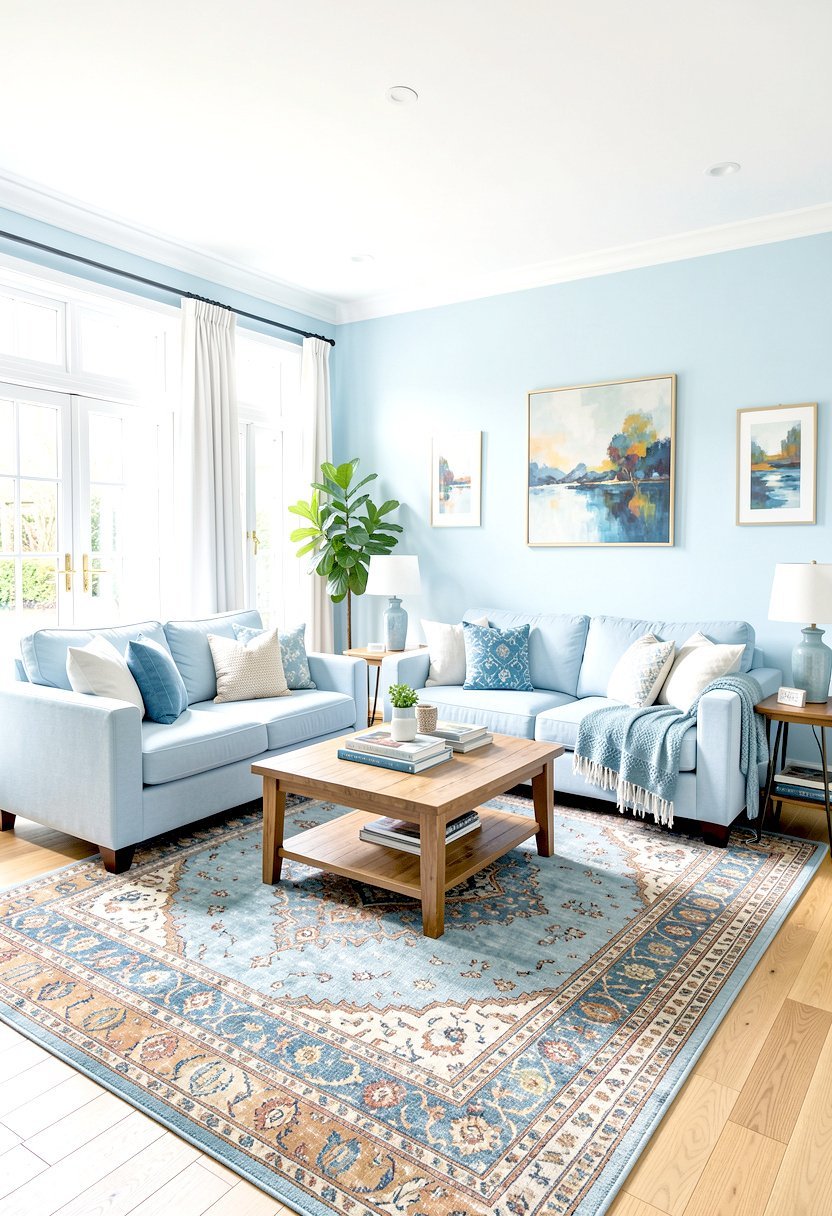
Area rugs are huge for defining a space, especially if you have an open floor plan. I love a rug that has a subtle blue pattern, or even a solid blue if the furniture is neutral. It grounds the room and stops the light blue walls from making the space feel like it is floating. A good rug is the foundation of a stylish home decor project.
If your room feels empty, a rug is the fix. Do not be afraid to go large, because a tiny rug makes a room look smaller than it actually is. It is a common mistake that people make trying to save a few bucks. Buy a big rug, let it go under the front legs of your furniture, and you will see your living room finally feel like a proper, cozy space.
A large rug changes everything instantly.
- Use rugs to define areas.
- Pick rugs with blue patterns.
- Always buy a large size.
- Place under front furniture legs.
10. Incorporate Green Plants Everywhere

Blue and green are nature colors, and they belong together in every single room. I have plants everywhere in my light blue living room, and the contrast is just perfect. A big fiddle leaf fig or a hanging spider plant adds a fresh, organic look that softens the edges of the room. It makes the space feel alive, breathable, and genuinely relaxing to be in.
People worry about killing plants, but you can just start with something easy like a snake plant. It adds that needed vertical height and a deep, rich color that makes the light blue look even brighter. Do not skip the greenery, because a room without plants is just a box. Bringing the outside in is the final step to making your home feel truly finished and vibrant.
Nature is the best decor partner.
- Place plants near blue walls.
- Use green for fresh contrast.
- Start with easy indoor plants.
- Add height with tall greenery.
11. Add Mirrors to Reflect Light
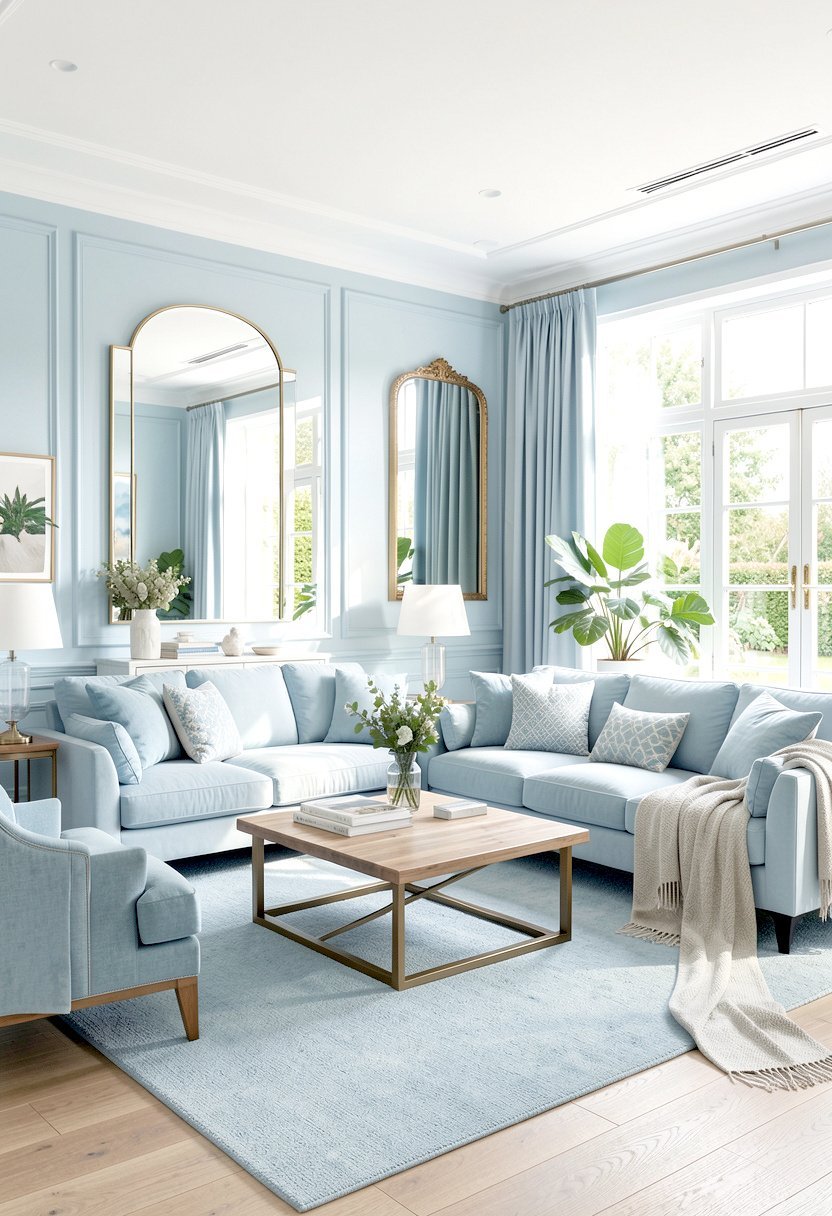
If your room feels a bit tight, hang a big mirror on a blue wall. It bounces the light around and makes the blue feel deeper and more interesting. I always put a mirror opposite a window so it catches all that incoming light. It is a simple, cheap trick that makes a huge difference in how big your living room feels every single day.
A mirror also adds a focal point that is not a TV. Many people make their TV the center of the room, which is a major mistake if you want a relaxing vibe. Use the mirror to reflect your art or your plants, adding layers of interest. It is a clever way to expand your space without doing any real construction. Just hang one up and watch the room expand.
Mirrors are pure magic for decor.
- Hang mirrors opposite a window.
- Expand the feel of rooms.
- Avoid making TV the focus.
- Reflect your beautiful wall art.
12. Mix Old and New Pieces

A room full of brand new furniture often feels like a showroom, not a home. I love mixing a vintage side chair with a modern, clean-lined sofa in a light blue room. The history of the old piece gives the space character, while the new sofa keeps it from feeling messy. It is that perfect blend that makes a living room feel truly cozy.
Do not be scared to hit a thrift store for a unique table or lamp. A vintage brass lamp looks incredible against a light blue wall, and it adds that soul your room might be missing. If everything is from the same store, the room will have no personality at all. Stop buying everything from one place, find some unique treasures, and make your space feel like your own.
History makes your home feel lived-in.
- Mix vintage with modern items.
- Find unique thrift store lamps.
- Avoid showroom, sterile style looks.
- Add personality with old treasures.
13. Focus On Soft Lighting
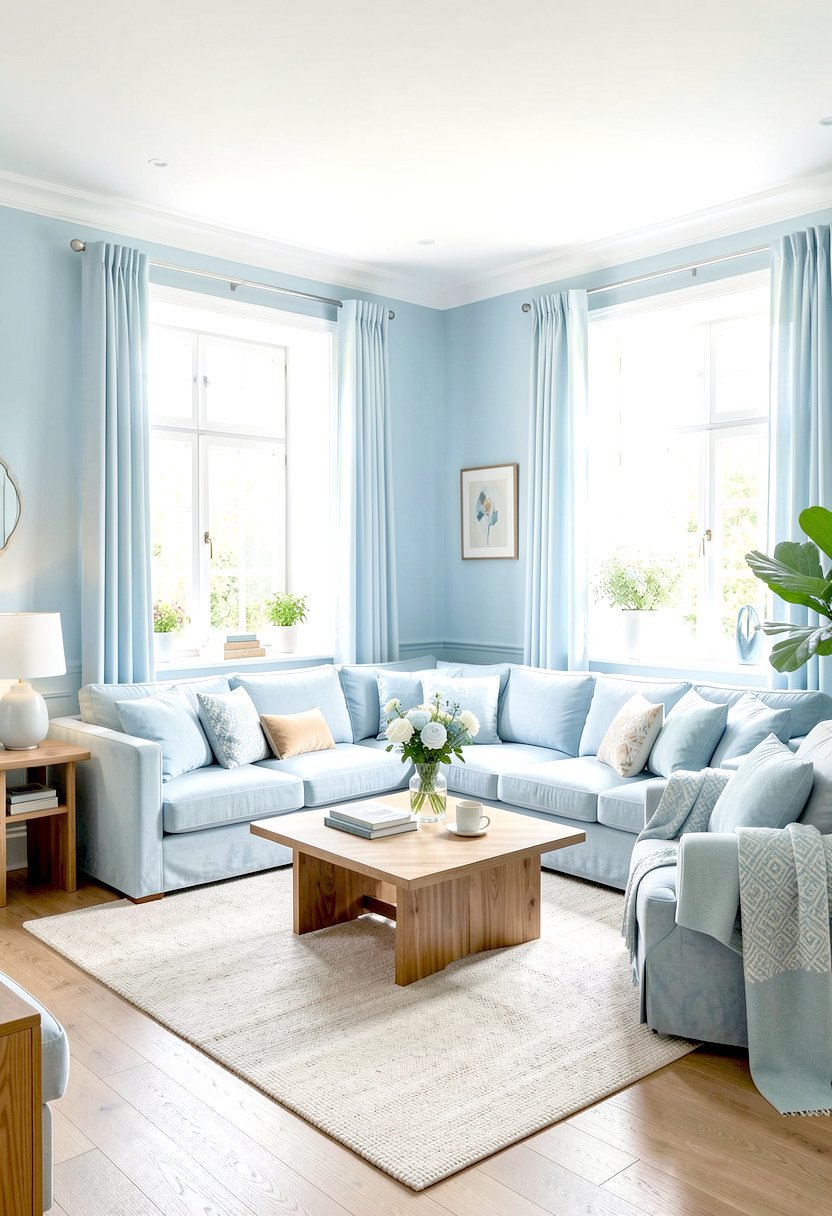
At night, your light blue walls can look a bit washed out if you only use one big overhead light. I hate overhead lighting, it is harsh and unkind to everyone. Use floor lamps, table lamps, and even wall sconces to create a warm, layered glow. It changes the mood from daytime airy to evening cozy, making the blue feel rich, deep, and very relaxing.
Use warm-toned light bulbs to keep the chill away. If you have cool-toned bulbs, your blue walls will look like ice, which is the opposite of cozy. A few lamps placed at different heights create a warm, inviting atmosphere that makes you want to curl up with a book. Lighting is everything, so do not settle for that one bright, sad bulb in the middle of the ceiling.
Layered light is the secret sauce.
- Avoid harsh overhead light bulbs.
- Use lamps at different heights.
- Choose warm-toned light bulbs only.
- Create a cozy evening glow.
Final Thoughts
I hope these ideas help you create a space that feels like you. Dealing with colors can be tricky, but light blue is such a rewarding choice once you get the balance right. Do not overthink it, just start with one wall or a few pillows, and let the room grow naturally. Trust your gut, stay bold with your choices, and you have got this.
| Decor Item | Best Blue Shade | Why It Works |
|---|---|---|
| Wall Paint | Dusty Sky | Soft and neutral |
| Throw Pillow | Navy | Adds needed contrast |
| Window Drapes | Pure White | Lets light flow |
| Coffee Table | Honey Oak | Warms up blue |
| Floor Lamp | Antique Brass | Adds luxe sparkle |
| Area Rug | Patterned Blue | Anchors the space |
| Indoor Plants | Deep Green | Organic pop |
| Mirror Frame | Gold | Reflects light |
| Throw Blanket | Cream Knit | Adds comfy texture |
| Picture Frames | Walnut Wood | Earthy grounding |
| Side Chair | Navy Velvet | Bold focal point |
| Shelf Decor | White Ceramic | Clean look |
| Ceiling Light | Brass Finish | Warm overhead glow |
| Wall Art | Watercolor | Soft artistic touch |
| Vase | Clear Glass | Airy and light |
Frequently Asked Questions
Is Light Blue a Good Color for a Living Room?
Yes, it is excellent. It creates a calm, airy atmosphere that feels relaxing rather than intense. Many people worry it will feel cold, but if you add warm wood tones, brass, and textured fabrics, it becomes a sophisticated and very welcoming space for everyone.
Can I Paint My Living Room Light Blue If It Is Small?
Absolutely. A light, airy blue can actually make a small room feel much bigger and more open. Just make sure you keep the trim white, use lots of natural light, and incorporate mirrors to bounce the light around. It really opens everything up.
Are There Specific Colors That Match Well with Light Blue?
Light blue is very versatile. It looks stunning with warm whites, creamy tans, navy blue, and rich wood tones. If you want a bit more pop, try adding touches of mustard yellow or emerald green. These colors add warmth and life to the room.
Do I Need to Buy All New Furniture for a Blue Room?
No, you definitely do not. Your current furniture will likely look great, especially if it is neutral like grey, white, or wood. You can simply change your rug, pillows, and art to bring in the blue tones without spending much money at all.
Should I Paint the Ceiling Light Blue As Well?
You could, but I prefer keeping the ceiling white. It keeps the room feeling taller and fresher. If you paint the ceiling blue, it can feel like the room is closing in on you, which is the opposite of the airy vibe.
Will Light Blue Decor Look Dated in a Few Years?
Not at all. Light blue is a classic, timeless color that has been used in home design for generations. It is far more enduring than trendy colors like bright neon or dark, moody shades. It will look fresh and beautiful for many years.
Does Light Blue Work with Modern or Traditional Styles?
It works perfectly with both. In a modern space, keep the lines clean and use metallic accents. In a traditional home, use more wood, patterned textiles, and vintage furniture. The color adapts to whatever style you already have in your home right now.
Can I Use Light Blue in a Living Room That Gets No Sun?
Yes, but you have to pick the right shade. Avoid the grey-blues, as they will look dull without sun. Go for a blue that has a tiny bit of green or yellow in it, which will keep it feeling warm and bright.