

Your bedroom feels like a dorm room because of those plain, white walls. You stare at the corners and wish for something lively to break the monotony.
Most people just buy cheap plastic vines and tape them up with ugly clear strips. It looks messy, low effort, and frankly, it cheapens your space.
You will see how to drape, layer, and attach greenery to turn your walls into a lush escape. My tips help you pick the right leaves and hardware to achieve a high-end, garden look.
1. Frame Your Bed With Trailing Ivy
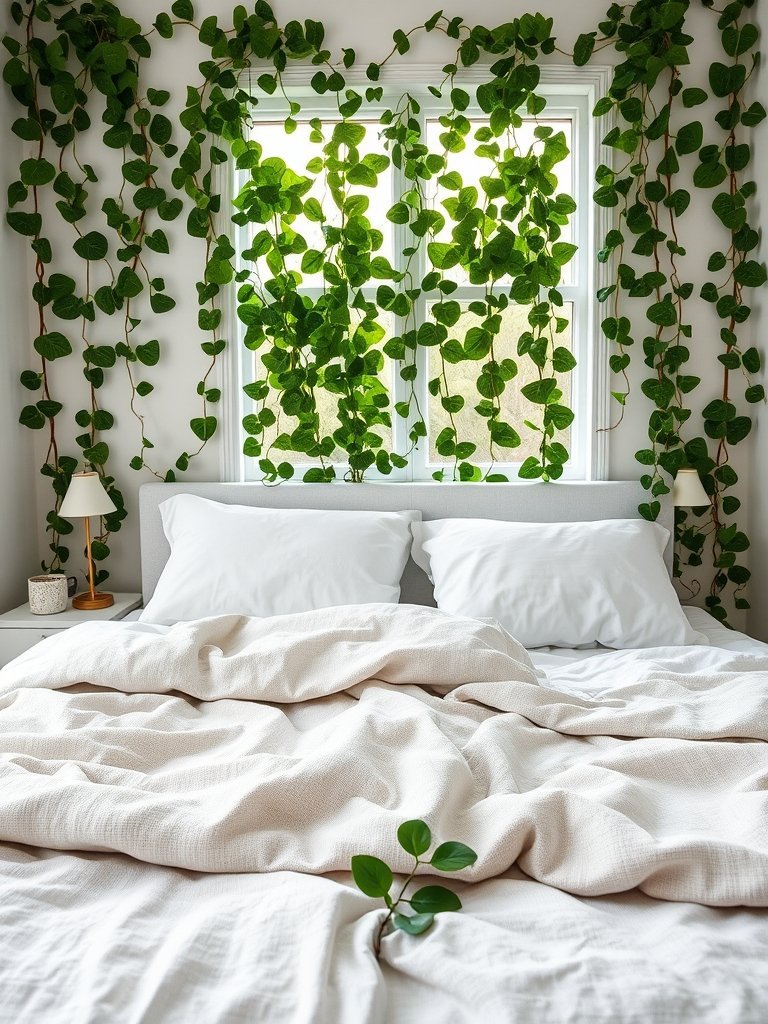
Start by mounting two gold hooks on the ceiling above your headboard. Buy realistic silk ivy strands that look thick and full. Drape them down each side of your bed frame to create a soft, romantic curtain effect.
Quality matters here so pick leaves with different shades of green. Do not bunch them together too tightly. Space them out slightly to keep the air moving and the view light. This design frames your bed like a piece of art.
Heavy velvet ribbons can also secure the vines to your wall for a polished finish. Avoid plastic ties because they look tacky. Instead, use thin wire or matching ribbon to hold everything in place. You will notice how the gold hooks add a touch of luxury to the greenery.
- Use gold hooks for a rich look.
- Choose high quality silk leaves.
- Space out strands for volume.
- Secure vines with fabric ribbons.
2. Weave Vines Through A Metal Headboard
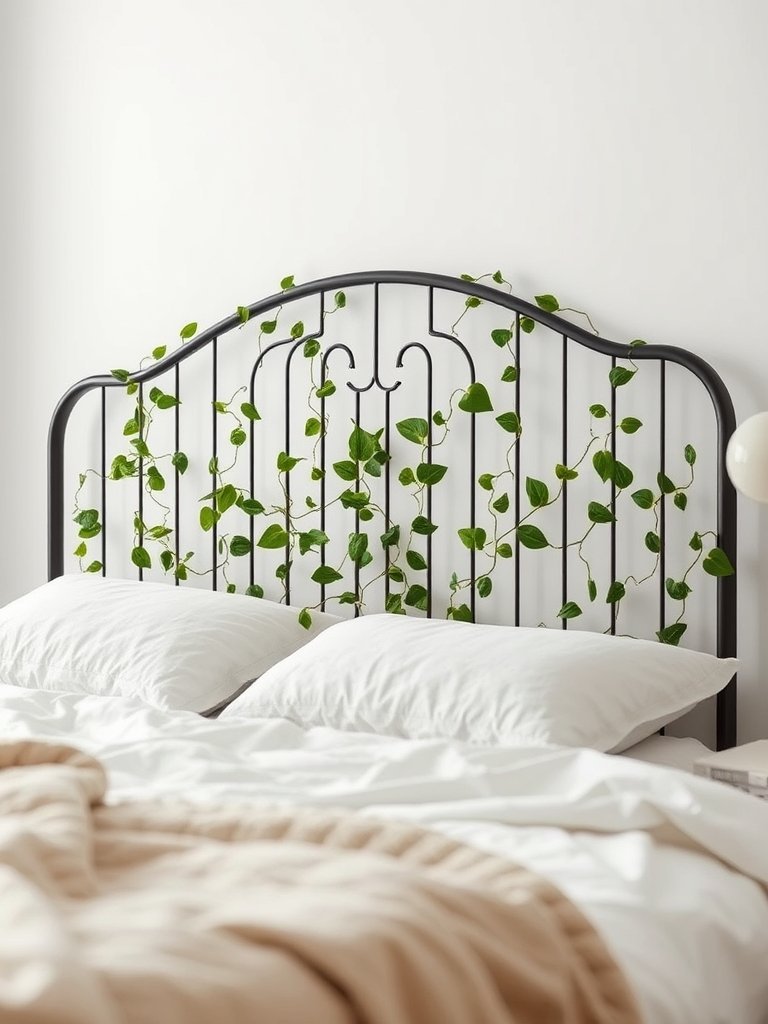
Iron headboards often feel cold and too stiff for a cozy bedroom vibe. Weaving long, thin vines through the bars changes the entire mood of your furniture. Start at the bottom and wind the stems upward in a loose, natural pattern.
Pick a variety that has small leaves to avoid covering too much of the metal design. You want the vines to look like they are growing through the gaps. It creates an organic texture that feels curated and expensive.
Maintenance is simple because you only need to dust the leaves once a month. Use a damp cloth to wipe them down gently. If you want more drama, add a tiny string of warm lights inside the leaves. The glow will reflect off the metal and make your room feel warm.
- Weave vines through iron bars.
- Pick small leaf varieties.
- Dust leaves monthly for shine.
- Add lights for extra warmth.
3. Hang A Cascading Vine Wall Canopy
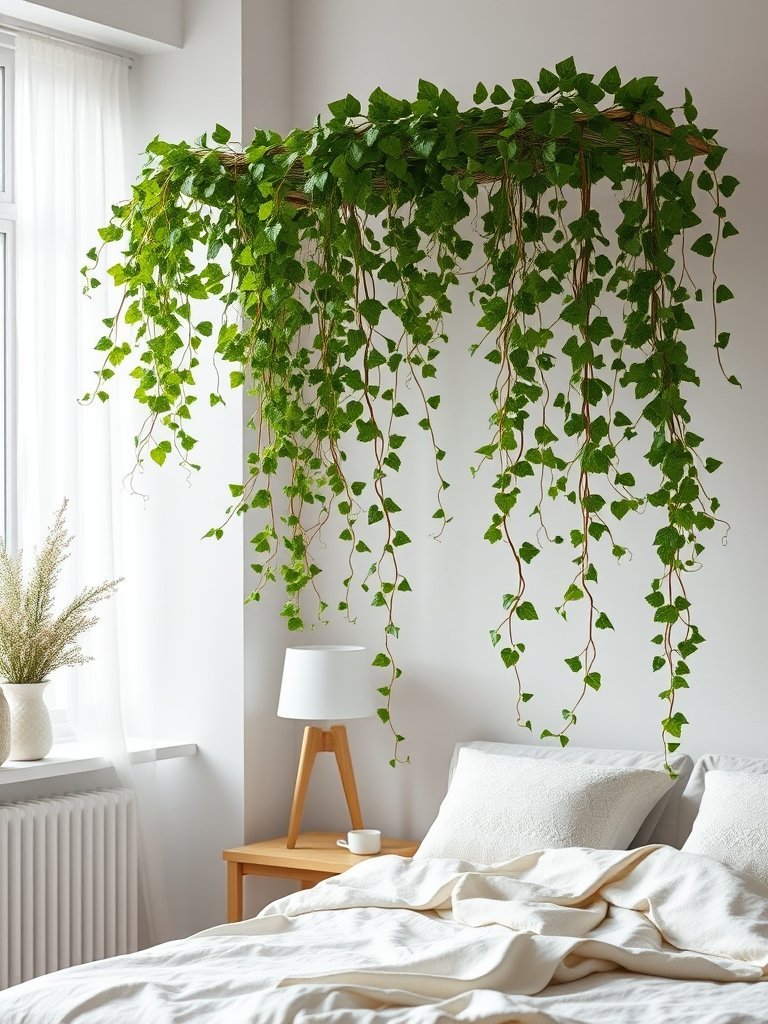
Ceiling height matters when you want to make a big impact in a small room. Use ceiling hooks to anchor long strands of faux wisteria or pothos. Let them hang down like a soft curtain against one main wall.
Creating this waterfall effect adds height and pulls the eye upward. It makes your space feel taller and much more open than it really is. Keep the lines straight so the vines hang properly without looking like a tangled mess.
Ensure the leaves stay clear of your pillow area so they do not tickle your face at night. You can tuck the ends behind a shelf or a nightstand. This subtle trick grounds the installation and makes it feel intentional. It looks custom and very high end.
- Use ceiling hooks for height.
- Create a waterfall wall effect.
- Keep lines straight and clean.
- Tuck ends behind bedroom furniture.
4. Outline Your Mirror With Greenery
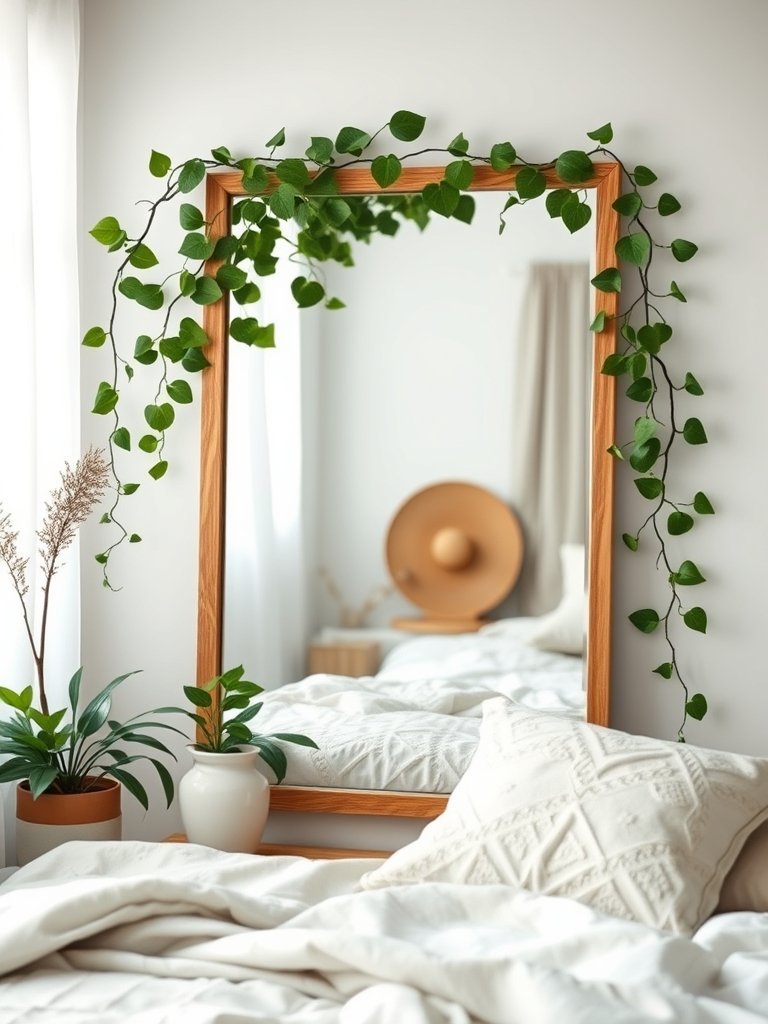
Mirrors reflect light and make your room feel bigger, but edges often feel boring. Take a strand of realistic ivy and wrap it carefully around the outer frame. Secure it with small adhesive clips that hide behind the leaves.
Choose vines that have small flowers to add a tiny splash of color. This makes your mirror look like a Victorian garden feature. It is a simple way to elevate a basic piece of glass without buying a new frame.
Check that the leaves do not block your view when you look in the mirror. A little bit of overlap is okay, but keep the center clear. This balance keeps the decor functional and stylish. You will love how much personality this adds to your morning routine.
- Wrap ivy around mirror edges.
- Use adhesive clips for safety.
- Add tiny flowers for color.
- Keep the center view clear.
5. Layer Vines On A Floating Shelf
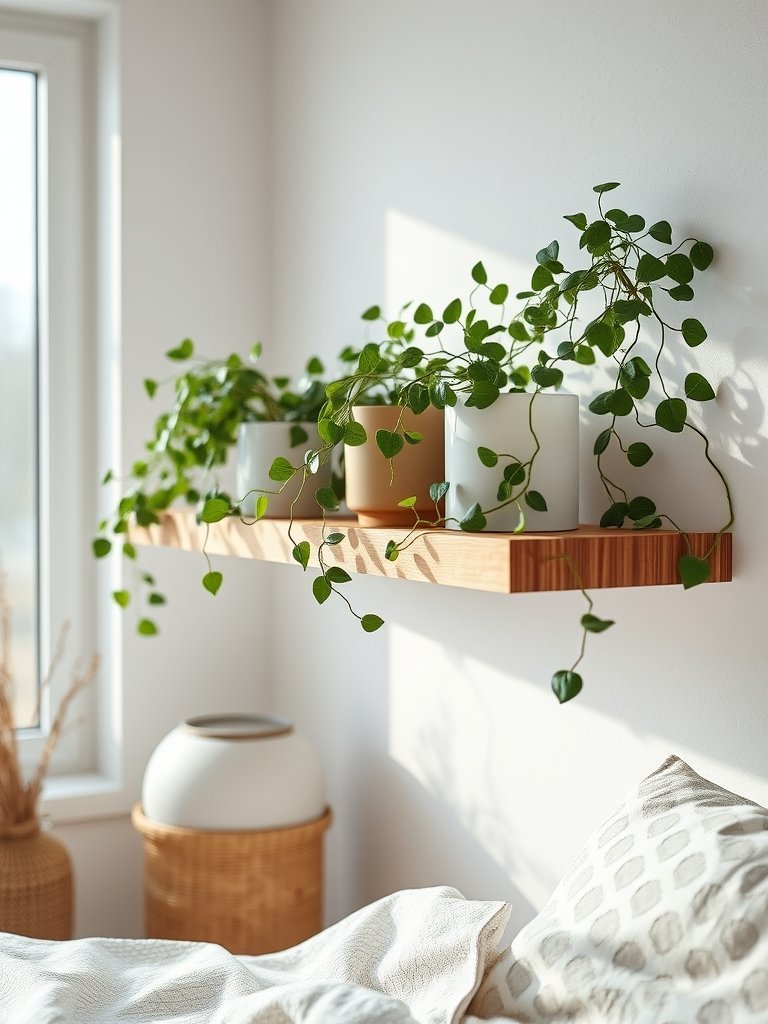
Floating shelves often look empty or cluttered with too many small items. Place a long vine on one side and let it trail down toward the floor. This provides a nice contrast to your books or frames.
Use a mix of different leaf sizes to keep the visual interest high. I prefer using a combination of long pothos vines and smaller ivy. They look great when they drape over the edge of the shelf. It softens the hard lines of the wood.
Avoid overcrowding the shelf because you want the leaves to be the focus. A few curated items next to the greenery will show off your style. This look is very modern and feels professional. It is the easiest way to upgrade a wall today.
- Use trailing vines on shelves.
- Mix different leaf sizes.
- Soften hard wood shelf edges.
- Avoid overcrowding your decor.
6. Create A Green Corner Nook
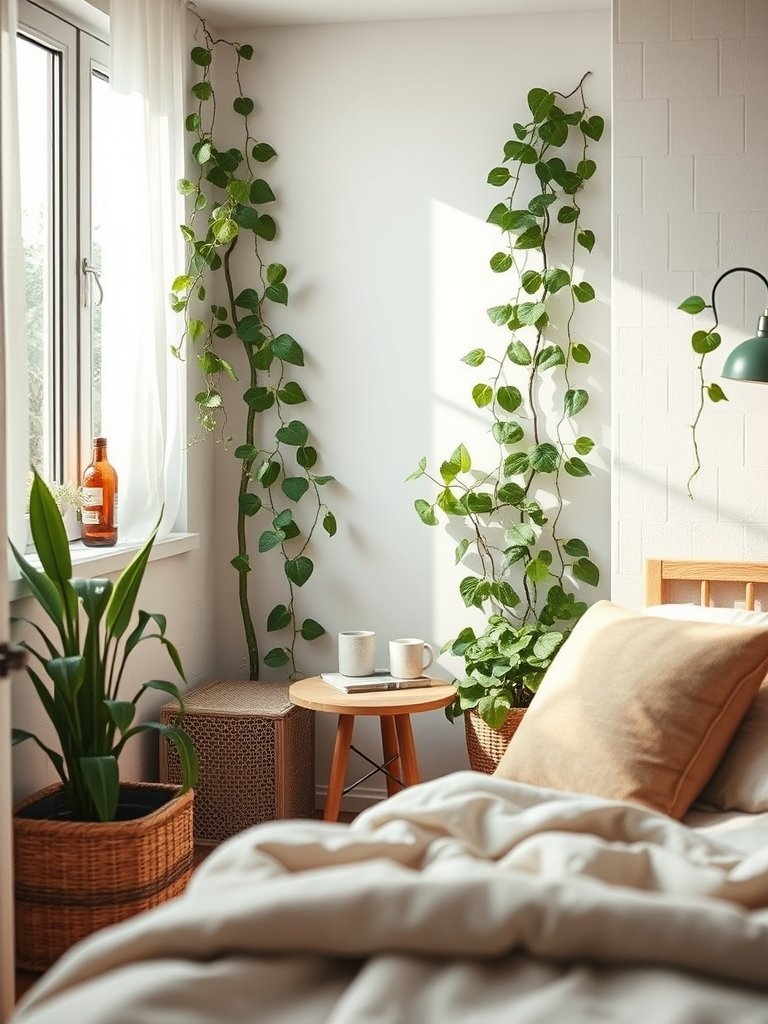
Corners often become dead space where dust and shadows gather. Add a tall ladder or a corner stand to hold trailing vines. Let the leaves spill over the edges to fill the empty volume of the room.
Select a pot that matches your bedding to keep the design cohesive. A woven basket or a ceramic pot works wonders here. The goal is to make the corner feel like a hidden, lush escape. It is perfect for a reading chair nearby.
If you have a window in that corner, use the natural light to highlight the leaves. The sun will make the plastic look more like real nature. Keep the area tidy to ensure the greenery remains the star of the show.
- Fill dead corner spaces easily.
- Match pots to your bedding.
- Use baskets for natural texture.
- Utilize light to highlight leaves.
7. Decorate Your Curtain Rods
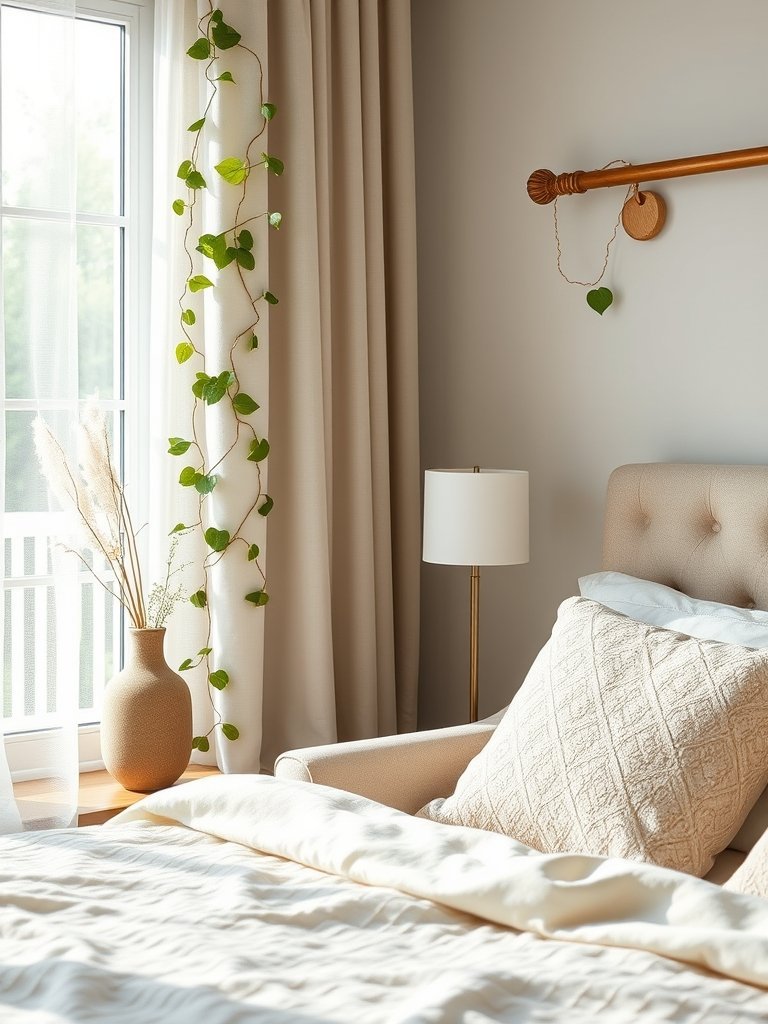
Curtain rods are usually forgotten, but they offer a great spot for hanging vines. Take long strands and drape them over the rod between your curtains. Let the ends hang down to create a soft, leafy frame.
Choose high quality silk foliage so it does not look like cheap plastic. You want the leaves to look soft and flowy, not stiff. The movement of your curtains will make the vines look very lively and authentic.
Ensure the vines do not get caught in the curtain rings when you open them. I tie the vines to the rod with clear zip ties to keep them stable. It is a quick upgrade that changes how the whole window looks instantly.
- Drape vines over curtain rods.
- Use soft silk foliage materials.
- Fix vines to avoid movement.
- Create a frame for windows.
8. Mix Vines With Wall Art
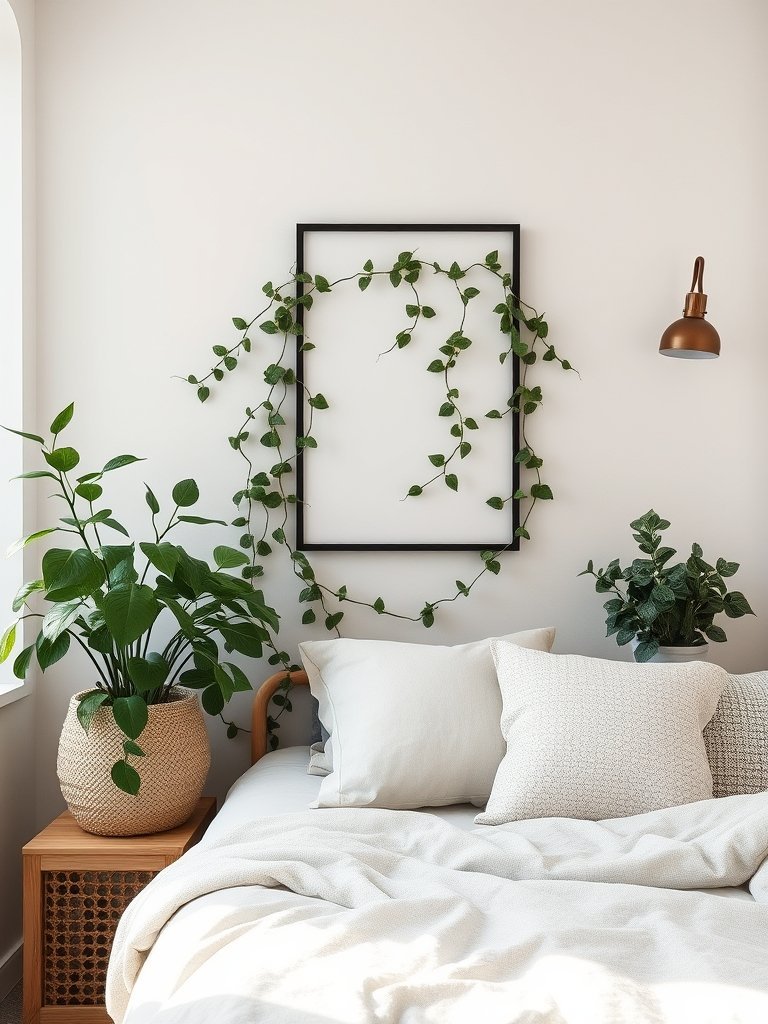
Gallery walls can feel too busy or disjointed if you have too many prints. Use vines to connect your frames and bring a sense of flow to the wall. Drape a vine loosely between two frames to link them together.
This technique helps soften the edges of your frames. It makes the entire gallery look intentional rather than just hung up at random. Choose vines that have thin stems so they do not compete with your art.
Keep the look balanced by not adding too much greenery. Two or three small connections are enough to unify the space. It adds a breath of fresh air to your photos. You will see how it ties the whole theme together.
- Link frames with thin vines.
- Soften hard frame edges nicely.
- Use vines to unify galleries.
- Keep the leaf volume low.
9. Design A Ceiling Perimeter Vine
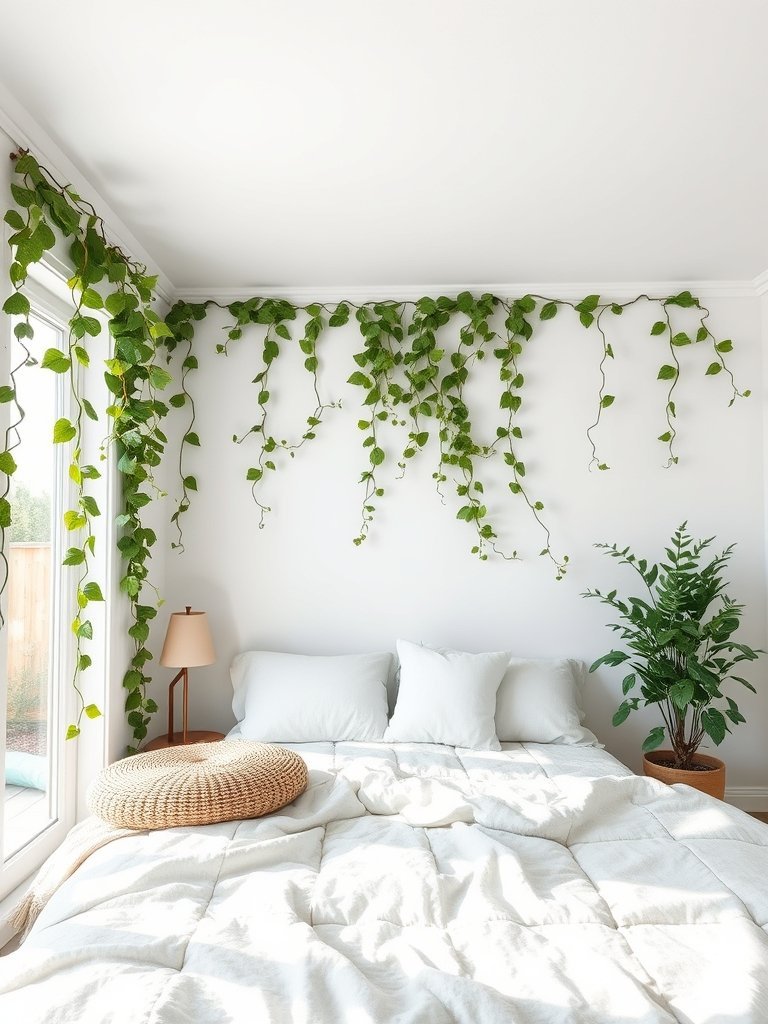
Walking into a room with greenery near the ceiling feels like entering a garden house. Use command strips to run a long line of ivy around the top edge of your walls. It draws the eye upward and adds a decorative border.
This approach works best in rooms with high ceilings. It gives a sophisticated, finished look that most houses lack. I use small green clips to keep the vines tight to the wall. It looks like the plant is actually growing there.
Check the corners and make sure the vine bends naturally. You do not want hard, sharp angles in the greenery. Smooth curves make the room feel much larger and more elegant. It is a simple way to elevate your space.
- Run vines around wall edges.
- Use green clips for support.
- Create soft curves in corners.
- Lift the eyes toward ceilings.
10. Wrap Vines Around Lamps
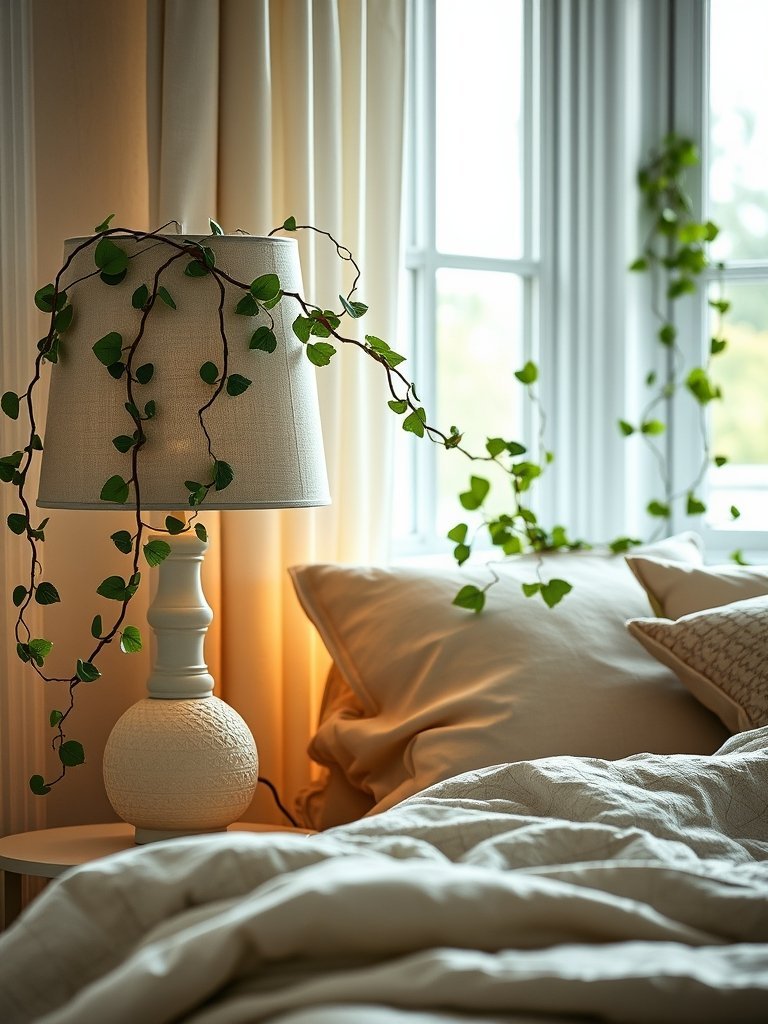
Lampshades often look boring if they are plain fabric or metal. Wrap a delicate vine around the base or the neck of your lamp. The light will cast interesting shadows through the leaves at night.
Select a vine that is heat resistant if your bulb gets warm. LED bulbs are best because they stay cool to the touch. This makes it safe to keep the decor close to the light source for long hours.
The shadow play creates a cozy mood that is perfect for sleeping or reading. It turns a basic lamp into a custom art piece. Ensure the leaves do not cover the switch so you can reach it easily.
- Wrap vines around lamp necks.
- Use LED bulbs for safety.
- Create shadows with the light.
- Keep the switch accessible daily.
11. Create A Hanging Vine Chandelier
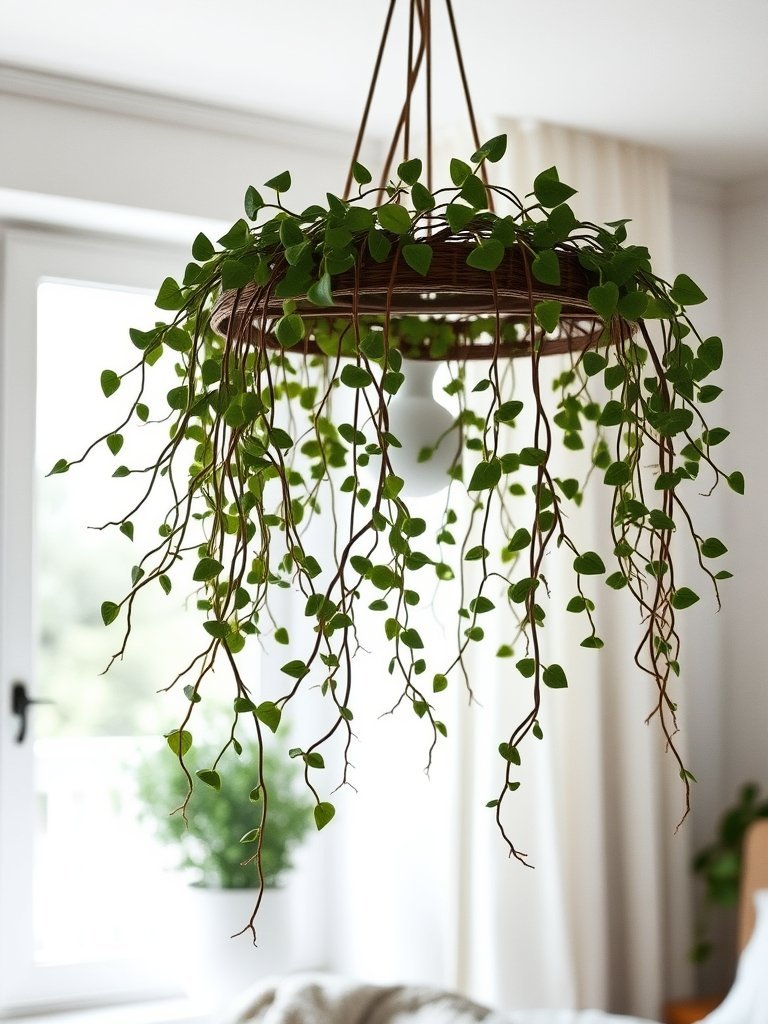
Take an old light fixture or a simple wooden hoop to build a custom chandelier. Wrap thick, lush vines around the frame until it looks like a hanging ball of leaves. Hang it in the center of your bedroom for drama.
This adds a massive amount of style without costing much money. You can even add fairy lights deep inside the leaves to give it a glow. It looks like a high end design piece from a fancy store.
Ensure the hook in your ceiling is strong enough for the weight. Artificial vines can get heavy when you bundle them together. A little bit of effort here pays off with a very impressive, custom focal point.
- Build a custom leafy hoop.
- Add lights inside the leaves.
- Secure the hook to ceiling.
- Create a bold, hanging centerpiece.
12. Frame Your Closet Doorway
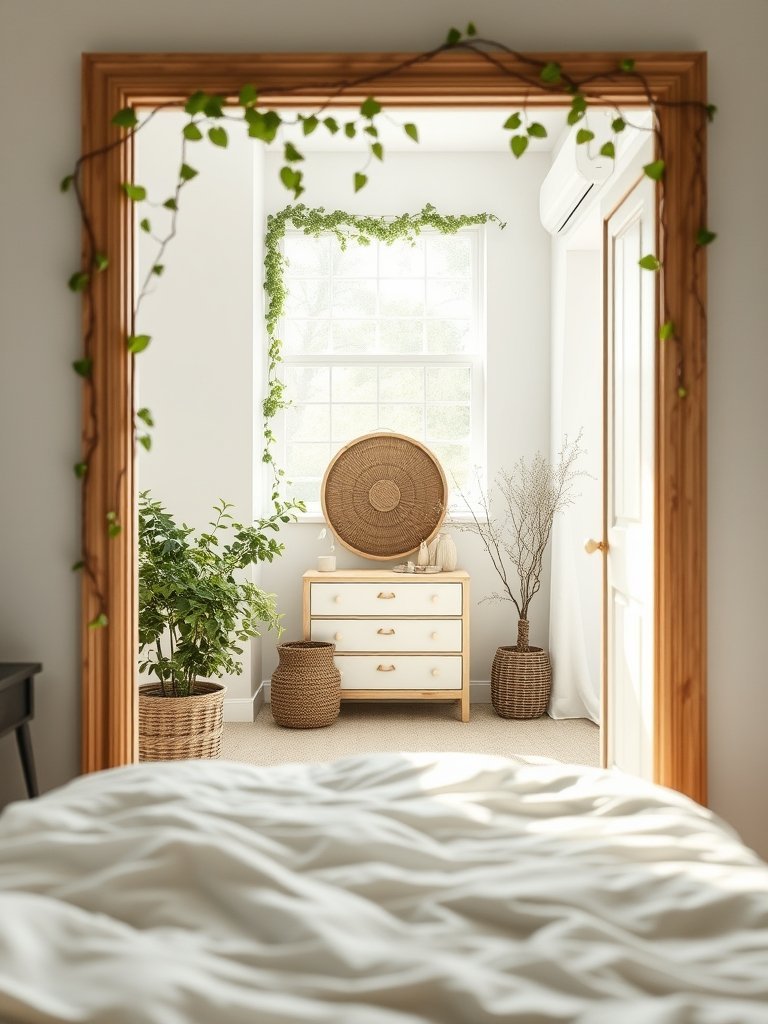
Closet doors are usually plain, so turn that frame into a garden entrance. Run vines up the sides of your door casing and over the top. It makes your bedroom feel like a boutique hotel room.
Use long strands that can handle the motion of the door opening. Secure them well with adhesive backing so they do not pull away. The greenery adds texture to a part of the room that usually gets ignored.
Choose a vine that looks dense so you cannot see the wall behind it. This creates a fuller, more luxury look. Every time you open your closet, the leaves move softly and add a bit of joy.
- Frame door edges with vines.
- Use dense leaves for coverage.
- Secure well for door movement.
- Transform a plain closet door.
13. Drape Vines On Your Headboard Top
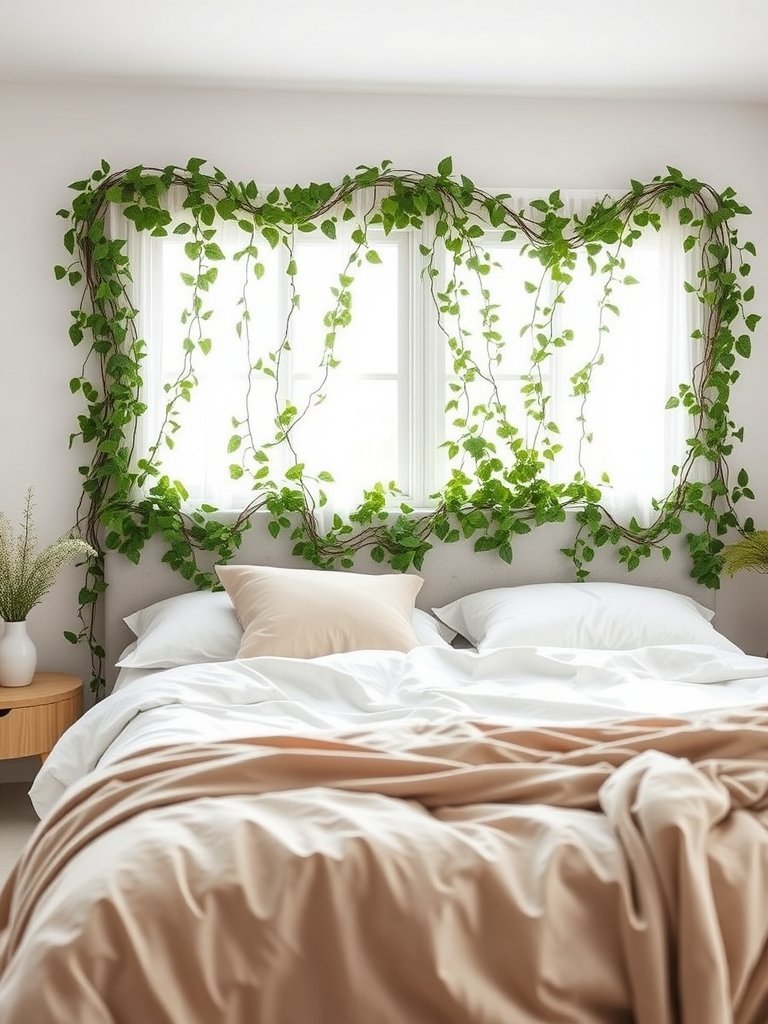
Sometimes a headboard is just too plain for your taste. Lay a long, thick vine across the top edge and let it cascade down the sides. It adds a natural, soft touch to the furniture.
This is a great way to hide a headboard that you do not like anymore. Use clips to keep the vine from sliding off while you sleep. The leaves create a nice border for your pillows and bedding.
It makes the bed feel like a permanent part of a garden. If you want to change the style, you can swap the type of vine in minutes. It is a low risk update that gives you a high reward.
- Lay vines across headboard tops.
- Hide boring furniture with leaves.
- Secure the vine with clips.
- Refresh your style in minutes.
14. Use Vines As Wall Art Accents
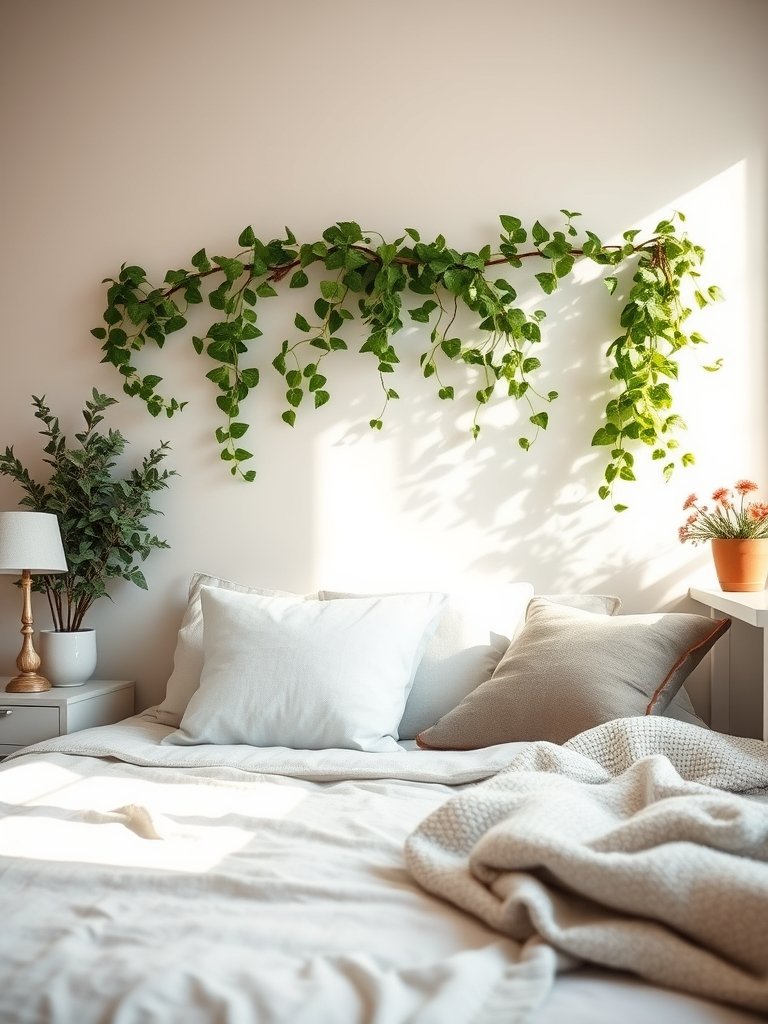
You do not need many items to make a statement wall. Take a single, long vine and arrange it in a shape like a circle or a wave on your wall. Use clear thumb tacks to pin it into place.
This is a very modern and clean approach. It uses the greenery as a line drawing rather than a forest. It keeps the room feeling spacious while adding a bit of nature. Your wall becomes a canvas.
Choose a wall behind your desk or chair for the best impact. It is subtle but very effective. You can change the shape whenever you feel like having a new look. It is simple, fun, and very budget friendly.
- Arrange vines in modern shapes.
- Use thumb tacks for mounting.
- Keep the wall feeling open.
- Change shapes for new looks.
15. Create A Canopy Over Your Desk
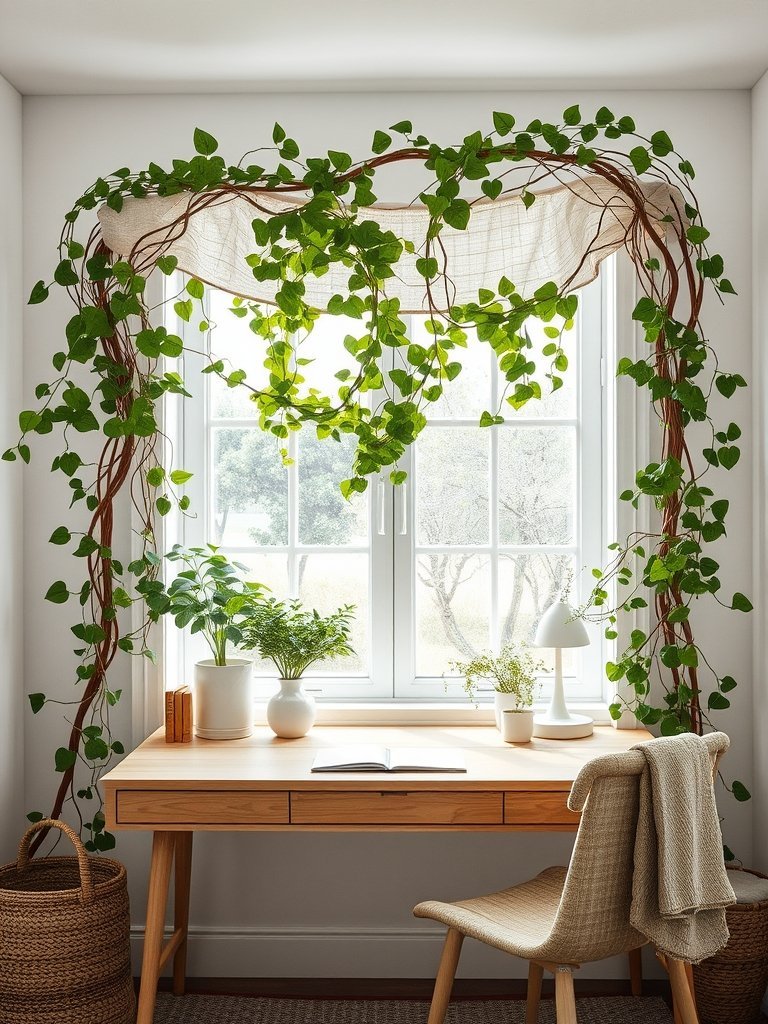
Your desk area needs to be a place where you feel calm and focused. Drape vines above your desk to create a small, green canopy. It makes the space feel private and very special.
Use command hooks to hold the vines high above your head. This keeps the leaves away from your papers and laptop. The greenery creates a soft background for your computer screen and workspace.
If you have a monitor, drape the vines around the edge to frame it. This makes your tech feel less cold and harsh. You will work better in a space that feels like a hidden, quiet retreat.
- Build a canopy above desks.
- Keep leaves away from items.
- Frame the monitor with vines.
- Create a quiet, private space.
16. Accent Your Bedroom Window
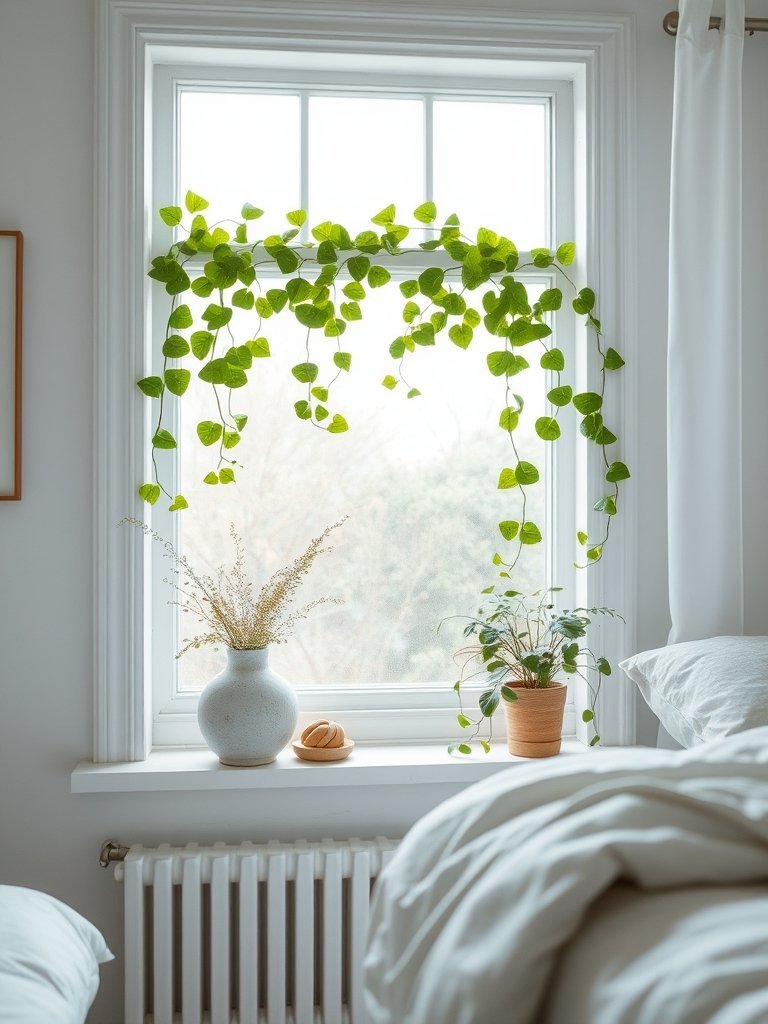
Window treatments can be expensive, so use vines to soften the look of your blinds. Hang long strands of ivy from the curtain rod and let them trail down the sides. It adds natural light and softness.
The sun will filter through the silk leaves, creating a glowing effect. This makes the room feel brighter and more energized during the day. It is a fantastic way to dress up a window without buying curtains.
If you want more privacy, combine the vines with thin, white sheer fabric. The mix of fabric and leaves is very classic and elegant. It gives you the best of both worlds for a very low cost.
- Soften blind edges with vines.
- Let sun glow through leaves.
- Avoid expensive curtain purchases.
- Mix with sheer fabric curtains.
17. Decorate Your Bookshelf Backing
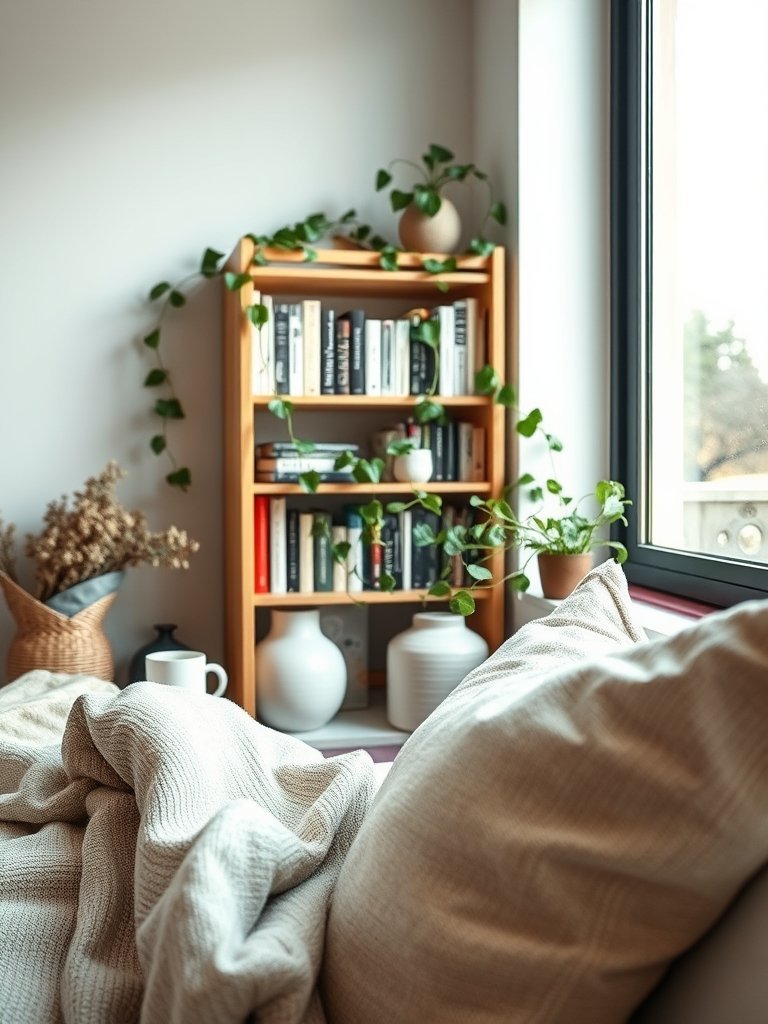
Bookshelves look much better when they have a bit of depth. Place long, thin vines along the back edge of each shelf. It creates a lush backdrop for your favorite books and decor items.
This draws the eye deeper into the shelf and makes the furniture look rich. Use different shades of green to add more depth to the layout. It is a simple detail that makes your home look expensive.
Make sure the vines do not get in the way of grabbing your books. I tuck them into the corners where they stay out of reach. It is a smart way to add color to a dark wooden unit.
- Add depth to your bookshelves.
- Use deep green for contrast.
- Keep vines tucked in corners.
- Upgrade dark furniture easily.
Final Thoughts
I hope these ideas help you transform your bedroom into a beautiful, lush retreat. You do not need to spend a lot of money to make your space look expensive and curated. Just pick one of these ways to add greenery and watch your room change. Take it slow, pick the right spots, and enjoy your new natural look. You have got this.
| Idea | Difficulty | Cost |
|---|---|---|
| Bed Frame | Low | Low |
| Iron Headboard | Medium | Low |
| Wall Canopy | Medium | Medium |
| Mirror Edge | Low | Low |
| Floating Shelf | Low | Low |
| Corner Nook | Low | Medium |
| Curtain Rod | Low | Low |
| Wall Art | Low | Low |
| Ceiling Border | Medium | Medium |
| Lamp Wrap | Low | Low |
| Chandelier | High | Medium |
| Closet Door | Low | Low |
| Headboard Top | Low | Low |
| Wall Shape | Low | Low |
| Desk Canopy | Medium | Low |
| Window Decor | Low | Low |
| Bookshelf | Low | Low |
Frequently Asked Questions (FAQs)
Is it safe to put fake vines near my bed?
It is safe if you use high quality, fire retardant silk plants. Avoid cheap plastic versions that can melt or release bad odors. Always keep them away from direct heat sources like heaters or candles to prevent any fire risk at night.
Can I clean my silk vines easily?
Yes, you can clean them with a soft, damp cloth. I take mine down once a month and give them a quick wipe. A light dusting with a dry brush also works. Avoid using heavy chemicals because they can damage the fake fabric leaves.
Are there specific vines that look expensive?
Choose varieties with matte finishes and wire stems that you can bend. Glossy plastic leaves often look fake and cheap. Look for silk options with detailed leaf veins and natural color shifts. These small details make your home decor look much more professional.
Do I need special tools to hang the vines?
You only need basic items like command hooks, clear tape, or small pins. Avoid nails unless you are certain about your placement. Adhesive strips are perfect because they do not leave big holes in your walls and keep the installation looking very clean.
Will the vines fall off the wall?
They will stay up if you use enough adhesive hooks or pins. Make sure the wall is clean and dry before you stick anything on it. If you have heavy vines, use stronger hooks to support the weight so they do not pull down.
Can I mix different types of vines?
Mixing adds texture and a more natural feel to your room. Combine long, trailing pothos with thick ivy or even some flowering vines. Just keep the color palette similar so the arrangement looks intentional and does not become too messy or chaotic.
Should I use real vines instead of fake?
Real plants are beautiful, but they need light, water, and care. Faux vines are better for bedrooms where you might not have enough light. They look great without the stress of watering. Choose fake for low maintenance and a consistent, polished appearance.
Will the vines make my room look small?
They actually add depth and can make your room feel larger when placed correctly. Use vertical lines to draw the eye up to the ceiling. Avoid covering every wall. Strategically placing greenery in corners or around mirrors opens up the space and feels airy.